Why Basement Mold Is a Persistent Problem in Older Toledo Homes
Older Toledo homes were built before modern waterproofing. Here's why basement mold keeps returning, what it costs to fix, and how to stop it for good.
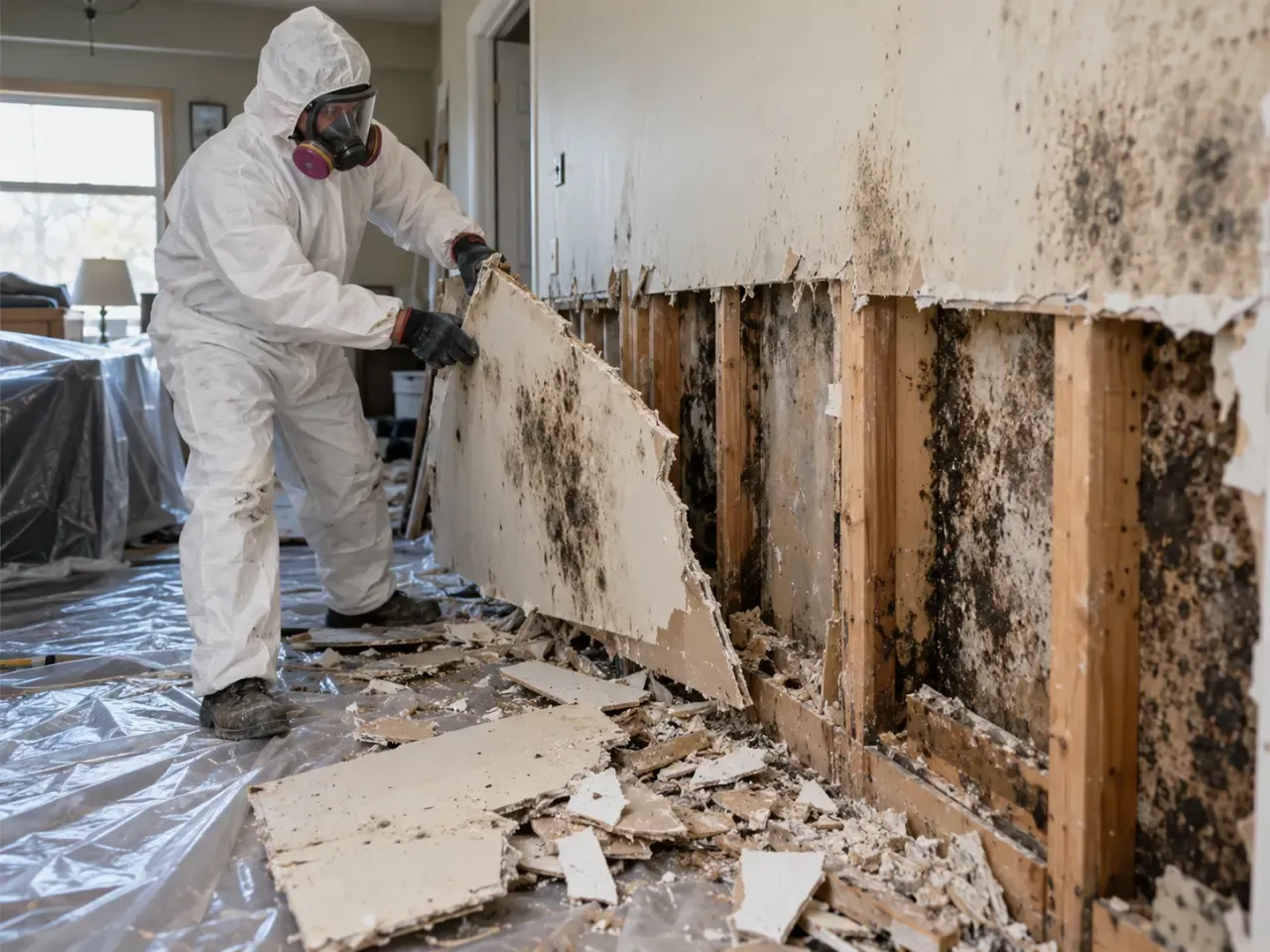
Basement mold in older Toledo homes is persistent because the water that feeds it never actually stops. Most houses built here before 1960 were constructed with no exterior waterproofing membrane, no footing drain, and a poured or block foundation that was never designed to stay dry. Until you fix the water source, mold comes back every time.
That is the short answer. The longer version involves clay soil, century-old drain tiles, and the specific way Lake Erie weather pushes groundwater against your foundation every spring. We work on these basements year-round, and the pattern is almost always the same. Here is what we see, why it keeps happening, and what actually stops it.
Why Older Toledo Homes Are Mold Magnets
Toledo's housing stock is old - a large share of homes in neighborhoods like Westgate, Deveaux, and Beverly were built between 1910 and 1955. Those houses sit on foundations that predate modern waterproofing by decades.
A typical 1920s Toledo basement has three strikes against it. The foundation is poured concrete or hollow clay tile with no exterior dampproofing. The footing drain, if one exists, is a clay tile line that has been crushed or silted shut for 40 years. And the soil around the house is heavy Toledo clay that holds water instead of draining it.
Add a humid Northwest Ohio summer and a water table that rises every spring, and you have a basement that stays damp from April through October. Mold needs three things: moisture, organic food (wood, drywall paper, cardboard, dust), and temperatures between roughly 40°F and 100°F. Your basement supplies all three for free.
If you want the full picture of what we do about it, our mold remediation in Toledo, OH service starts with finding the water source, not just scrubbing the wall.
The Four Moisture Sources We Find in Nearly Every Toledo Basement
Basement moisture and mold in Toledo OH almost always traces back to one of four sources. We test for all four on the first visit because treating the wrong one wastes your money.
1. Hydrostatic Pressure Through the Foundation Wall
When Toledo clay soil saturates after a heavy rain, water pushes against the exterior of your foundation. It finds every hairline crack, every cold joint, and every spot where the original dampproofing has failed. You see it as a white chalky line (efflorescence) or a damp patch that darkens after storms.
2. Failed or Missing Footing Drains
Homes built before 1960 often had clay tile footing drains that discharged to a storm sewer or a dry well. Those lines collapse, root-intrude, or silt shut. When they fail, groundwater has nowhere to go but up through your floor slab.
3. Window Wells and Bulkhead Doors
A clogged window well fills with 6 to 10 inches of water during a spring storm and dumps it directly against the basement wall. Old steel bulkhead doors in Point Place and Reynolds Corners homes rust through at the hinge line and let in rain sideways.
4. Interior Humidity and Appliance Leaks
An unvented dryer, a leaking water heater, or a sump pit that runs constantly all raise indoor humidity above 60%. Above 60% relative humidity, mold colonizes within 24 to 48 hours on any organic surface.
We see this constantly in the older housing near mold removal Point Place OH, where the proximity to the Maumee and Ottawa rivers keeps the water table high all year.
Why Does Basement Mold Keep Returning in Older Toledo Homes?
Basement mold keeps returning in older Toledo homes because the moisture source was never fixed - only the visible mold was removed. Bleach and store-bought sprays kill surface mold but leave the colony's roots inside porous concrete and wood.
Here is the cycle we see over and over:
- Homeowner scrubs the wall with bleach in spring.
- Wall looks clean for 4 to 6 weeks.
- June rains push groundwater back through the same crack.
- Mold returns, usually worse, because the bleach damaged the concrete surface and opened more pores.
The other reason mold returns is that most DIY cleanups miss the hidden reservoirs. Mold grows behind the fiberglass insulation batts on your basement wall, inside the bottom plate of a wood stud wall, and under the carpet pad. You can't see it, so you assume it's gone.
Proper black mold removal Toledo work involves removing the contaminated material, not just treating the surface. That means cutting out the bottom 12 to 24 inches of drywall, pulling the wet insulation, and HEPA-vacuuming the framing before any antimicrobial goes on.
How to Prevent Basement Mold in Toledo OH
Mold prevention for older homes in Toledo starts with water management, not with cleaning products. If you do only one thing, keep your basement under 50% relative humidity year-round.
Here is the order we recommend, from cheapest to most involved:
- Run a dehumidifier set to 45-50% RH. Empty it daily in summer or plumb it to a floor drain. A 70-pint unit handles about 1,300 square feet.
- Extend your downspouts 6 to 10 feet from the foundation. Most Toledo homes dump water 12 inches from the wall.
- Regrade the soil so it slopes away at 1 inch per foot for the first 6 feet. This alone stops a surprising number of damp basements.
- Clear window wells and replace rusted covers. A $40 cover beats a $4,000 remediation.
- Seal visible cracks with hydraulic cement, then apply a masonry sealer. This is a band-aid if hydrostatic pressure is the real issue, but it buys time.
- Keep gutters clean. A clogged gutter in a fall storm sends hundreds of gallons straight down your foundation wall.
For homes where the water table itself is the problem, we install structural drying and dehumidification Toledo OH systems that hold the basement at target humidity automatically. That is the difference between managing mold and ending it.
Common Mistakes Toledo Homeowners Make With Basement Mold
The mistakes we see most often in older Toledo houses all share one trait: they treat the symptom instead of the source.
- Bleaching the wall and calling it done. Bleach is 90% water. On porous concrete it feeds the mold it's supposed to kill.
- Painting over mold with Kilz or a similar sealer. The mold keeps growing behind the paint and eventually pushes it off the wall.
- Running a dehumidifier without a target humidity. If you don't set it to 45-50%, you're just running an expensive fan.
- Ignoring the smell. That musty odor is microbial volatile compounds. If you smell it, you have active growth somewhere.
- Assuming a new sump pump solved everything. A sump pump moves water that reaches the pit. It does nothing about water vapor coming through the wall above it.
- Skipping the mold inspection. Without moisture mapping and air sampling, you don't know where the colony actually is.
If you've already tried two or three of these and the mold is back, a mold inspection Toledo will tell you exactly where the water is entering and how far the growth has spread.
When to Call a Professional
Call a professional when the mold covers more than 10 square feet, when you can smell it in rooms above the basement, or when it has come back after two DIY cleanups. Those three conditions mean the moisture source is structural and the colony has moved into hidden cavities.
We also get called when someone in the house is reacting - coughing, headaches, or asthma flare-ups that get worse downstairs. That pattern usually points to elevated spore counts, which we confirm with air sampling before we touch anything.
Our team at Toledo Mold Defense handles the whole job: we find the water source, contain the work area, remove contaminated materials, dry the structure, and verify with post-remediation testing. You get a basement that stays dry and a report you can hand to a buyer or an insurance adjuster.
We work across the older neighborhoods where this problem is worst, including mold remediation in Westgate and the surrounding blocks of century homes.
Frequently Asked Questions
Why is basement mold common in older Toledo homes?
Older Toledo homes were built before modern waterproofing. Most have no exterior membrane, failed clay footing drains, and heavy clay soil that holds water against the foundation. That constant moisture feeds mold year after year, especially from spring through fall.
How can I prevent basement mold in Toledo?
Keep basement humidity between 45% and 50%, extend downspouts 6 to 10 feet from the foundation, regrade soil to slope away, and clear window wells. Fix any visible crack before the next rain. These five steps stop most mold before it starts.
Does a damp basement in Toledo need professional mold remediation?
If the damp area is larger than 10 square feet, smells musty upstairs, or has returned after two cleanups, yes. A pro finds the water source, removes contaminated materials, and verifies the fix with testing. DIY cleanup rarely reaches hidden growth.
What causes basement mold to return after cleanup?
The moisture source was never fixed. Bleach kills surface mold but leaves roots inside concrete and wood. When the next rain pushes water through the same crack, the colony regrows - usually within 4 to 6 weeks.
How much does basement mold remediation cost in Toledo?
Typical 2026 pricing in this area runs $1,500 to $6,000 for a residential basement, depending on square footage, how much drywall and insulation has to come out, and whether structural drying is needed. Small, contained jobs sit at the low end.
Get Help With Mold Remediation in Toledo
If your basement smells musty every time it rains, the mold is telling you the water source is still active. We'll find it, fix it, and verify the basement is dry before we leave.
Call Toledo Mold Defense at (419) 880-8176 to schedule an inspection.